
Training Two Dogs at Once: 8 Lessons from a Nanaimo Dog Trainer (Part 1)
In the past few months, working as a dog trainer here in Nanaimo with Rascals and Rescues Dog Training, I've worked with several two-dog families. Except for the first set — two lovely Labradors — it wasn't intentional. I mean, I knew there were two dogs in the home, but after speaking with the owners, we usually identified which of the two dogs we'd focus on. What I quickly learned, though, is that training both dogs — first separately, then as a pack — had unforeseen benefits for everyone.
Here are the first three things I've learned.
1. The dogs feed off each other's energy
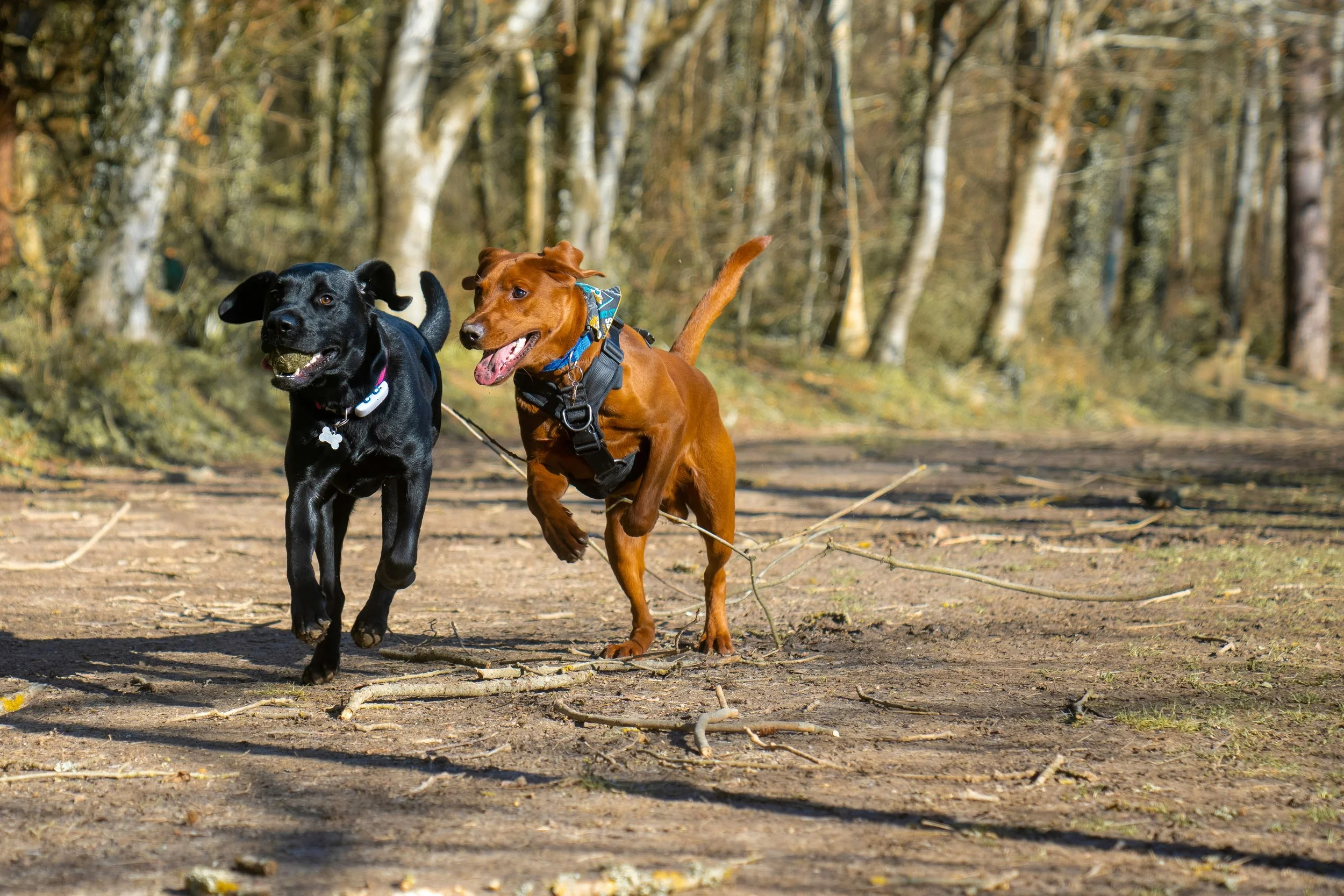
Tess and Tucker are great dogs — high-energy, loving, smart littermates. Their owner had a lot of experience living with and training working dogs, but she'd reached a point in her life where living with these two was getting hard. It was hard to walk them, hard to contain their energy in the house, and they competed for her attention by creating chaos. Attention for doing something naughty is still attention.
Working with the dogs individually, I watched how they interacted with their owner. Tucker wanted attention from people — he was very interested in me when I first met the dogs, and his owner said he was extremely affectionate. Tess wasn't as interested in new people, but she was more impulsive, with a higher prey drive, and had a lot of trouble following instructions outside.
Tucker wanted to please his owner, so when he had clear direction and understood what was being asked, he quickly cooperated for affection and treats. He also worked through his fear of new situations more quickly when his owner showed him what to do.
Tess operated on a different frequency. She was nervous around new challenges and needed to learn skills in smaller steps. She wanted to please her owner too, and was very food-motivated, but her desire to run, chase, and explore was a competing motivator.
Try this: Spend time with each dog, on their own, for a day or two. Notice how each one responds to praise, food, and new situations, on their own, without their sibling around. This will give you insight into what motivates them.
2. Each dog needs individual attention & training
Both dogs needed to have time alone with their owner. Each lesson, we worked on the same skills with each dog — impulse control, exiting and entering the home and yard calmly, not pulling on the leash, and coming back when called. But the pace and how we taught each skill depended on each dog's temperament and motivation.
After the first week, I saw a difference in both dogs and in their owner. Individually, they were calmer when working with her alone — and when they were together, they were starting to look to her for direction rather than to each other.
Try this: Spend one-on-one time with each dog this week —start with a skill you feel comfortable with- asking each dog to sit, stay and take one step backwards, walk back to your dog and reward with a treat or praise. Which dog can stay seated until you come back? Which dog jumps up to come to you? Can you slowly increase the length of time that the dogs sit and stay before you reward them?
3. Fighting over food, toys, or attention
Tucker's desire for people — for touch, for contact — is the kind of thing people find deeply rewarding. We love affectionate dogs, and for dogs like that, a person's response to their affection becomes highly valuable. Dogs, like people, protect what they value, and they have different ways of telling others to back off. Tucker had only ever known life with his sister Tess, but he'd bark and snap if she got too close to their owner. You can substitute food, treats, toys, or whatever else your dog values — Tucker was telling his sister to back off.
Because of Tucker's easygoing temperament, once he understood that this behaviour wasn't going to get him what he wanted — his owner's sole attention — he was eager to learn a different way to ask for it.
One important caveat: food and chew toys. I always recommend that dogs eat separately, either in different rooms or in their crates, because one will finish first and start looking for more. Did you ever have a sibling who finished eating first and then picked food off your plate? Eventually, you'd have had enough and pushed back — and then there were consequences for both of you.
Try this: Start feeding your dogs separately this week — different rooms or crates — and pay attention to whether any bickering or tension eases once "finishing first" is no longer an opportunity to take from the other.
If you're navigating a two-dog household and could use a hand, Rascals and Rescues' Tailored Training program is built around working with each dog individually, then together. I work with families throughout Nanaimo, Cedar, and Ladysmith.
Next in this series: the remaining five things two-dog households have taught me.
