
Help! My Rescue Dog Doesn't Like My Partner!

small hound dog with floppy ears sitting on a couch far away from a man
Hi, everyone! Sherri here. Welcome to the first-ever instalment of the 'Help!' series — where each post helps you tackle one real challenge you're facing with your rascal or rescue dog. This month, we're navigating a common one: fear-based aggression towards someone in your dog's everyday life. The goal of this series is to foster more understanding between you and your furry companion. This is also how I work with clients — thinking out loud, asking questions, looking at the whole picture. If that sounds like something your dog needs, here's where to start. Have a topic you want me to tackle? Send me a message via Facebook or Instagram @rascals_and_rescues.
So, you've fallen in love with your rescue dog… in a way, it feels like he chose you. And you've brought your new best friend home to meet the other members of your family. Surely he'll love them as much as he loves you… right? Instead, to your dismay, your adorable dog bares his teeth and starts to lunge. This isn't a play growl. Your jaw goes slack — and your stomach drops before your brain catches up.
Why Is My Dog Acting Like This?
Getting curious about the why behind any one of your dog's actions is important for fostering understanding and helping steer their behaviour in a safer, more manageable direction.
A dog's past experiences and family history can answer many questions about its behaviour. Perhaps they were caged for most of their lives, and this much up-close human interaction is new and overwhelming. They're not necessarily scared of any particular person, but too many people at once causes them anxiety.
Or perhaps they were a street dog, frequently hurt by people, and someone in your family has a similar energy or physical resemblance to those who caused them harm.
While you may not know exactly why — especially if the rescue centre didn't have much background on your dog — getting curious about their history will help you understand that this instinct has kept them safe up until now. Naturally, it will take some time for them to realize they no longer need it.
Other Expressions of Fear
Dogs, like humans, express fear in many ways. Sometimes that looks like baring teeth, lunging, and barking. Other times it looks like running away and hiding.
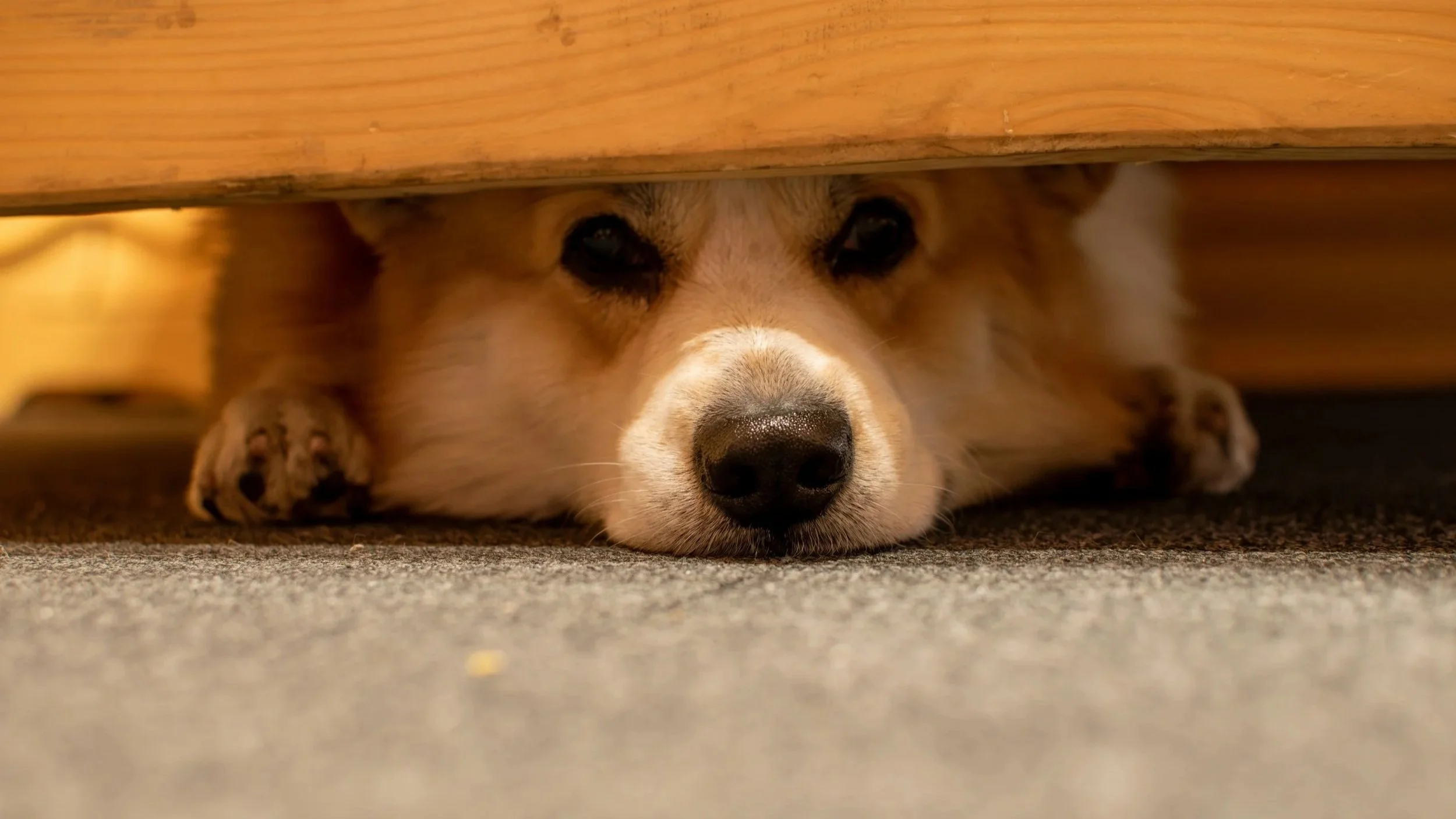
brown dog hiding under a bed
What to Do If Your Dog Hides
The best thing to do if they hide? Nothing. I'm not kidding.
Put yourself in their shoes. Imagine you had never left the house before, and suddenly you walk into a large, crowded party. The music is blaring, everyone is rushing up to you, yelling, getting very close. You'd probably want to step outside too. Now picture everyone at that party — boombox and all — following you out when you clearly asked for space. It wouldn't make you want to go back inside, would it?
When dogs run away to find a hiding spot, they're asking for space. Give them time to collect themselves, and allow them the grace to come back out on their own terms.
Strategies to Overcome Fear-Based Behaviour
First things first: if you're serious about helping your dog through this, it will require patience. You'll need to go at your dog's pace. Impatience has a cost. Frustration is contagious — the more of it you bring, the more your dog feels it and responds to it. You escalate. They escalate. Nobody wins.
Once you're clear on that, you're ready to begin.
Exercise One: Group Walks
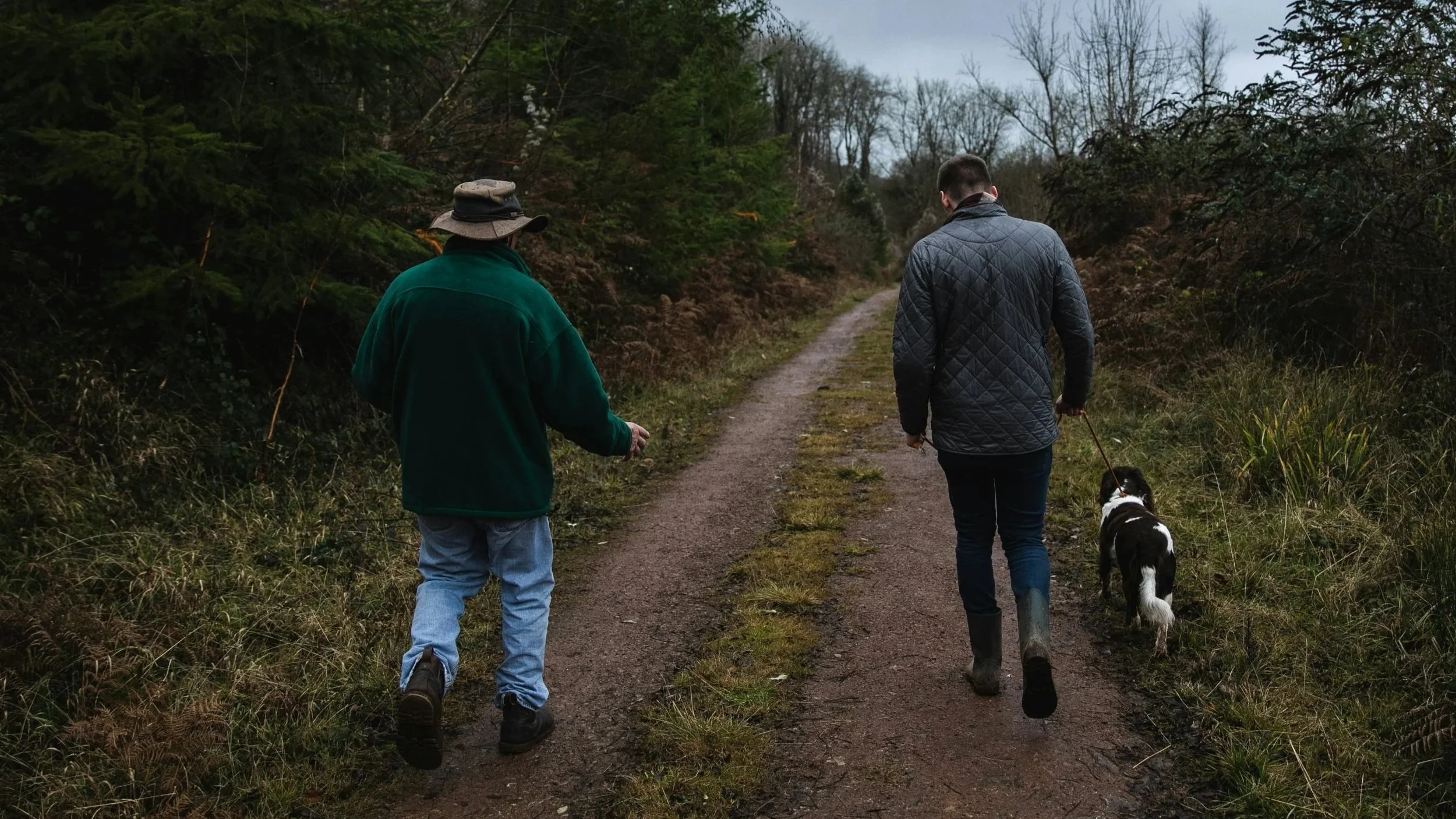
two people walking a dog on a country road
If there's one person your dog is particularly afraid of, start by going for walks together. Your dog will begin to associate something they love — walking — with this individual. Since walking is a sensory-rich experience full of sights and smells, the presence of someone they're wary of feels less overwhelming with all those distractions. Plus, there's plenty of space, so your dog never feels cornered.
Keep in mind: you, your dog's safe person, should be present on these walks too. Your dog needs someone they trust nearby if their anxiety starts to spike.
Exercise Two: Treat Throws
Next, ask the person your dog is fearful of to throw treats toward them — not hand them, throw them. This shows your dog that this person can be a source of good things without any expectation in return, like physical closeness. Over time, you'll likely see your dog inch closer. That's trust, building quietly.
Exercise Three: Take an Interest in Their World
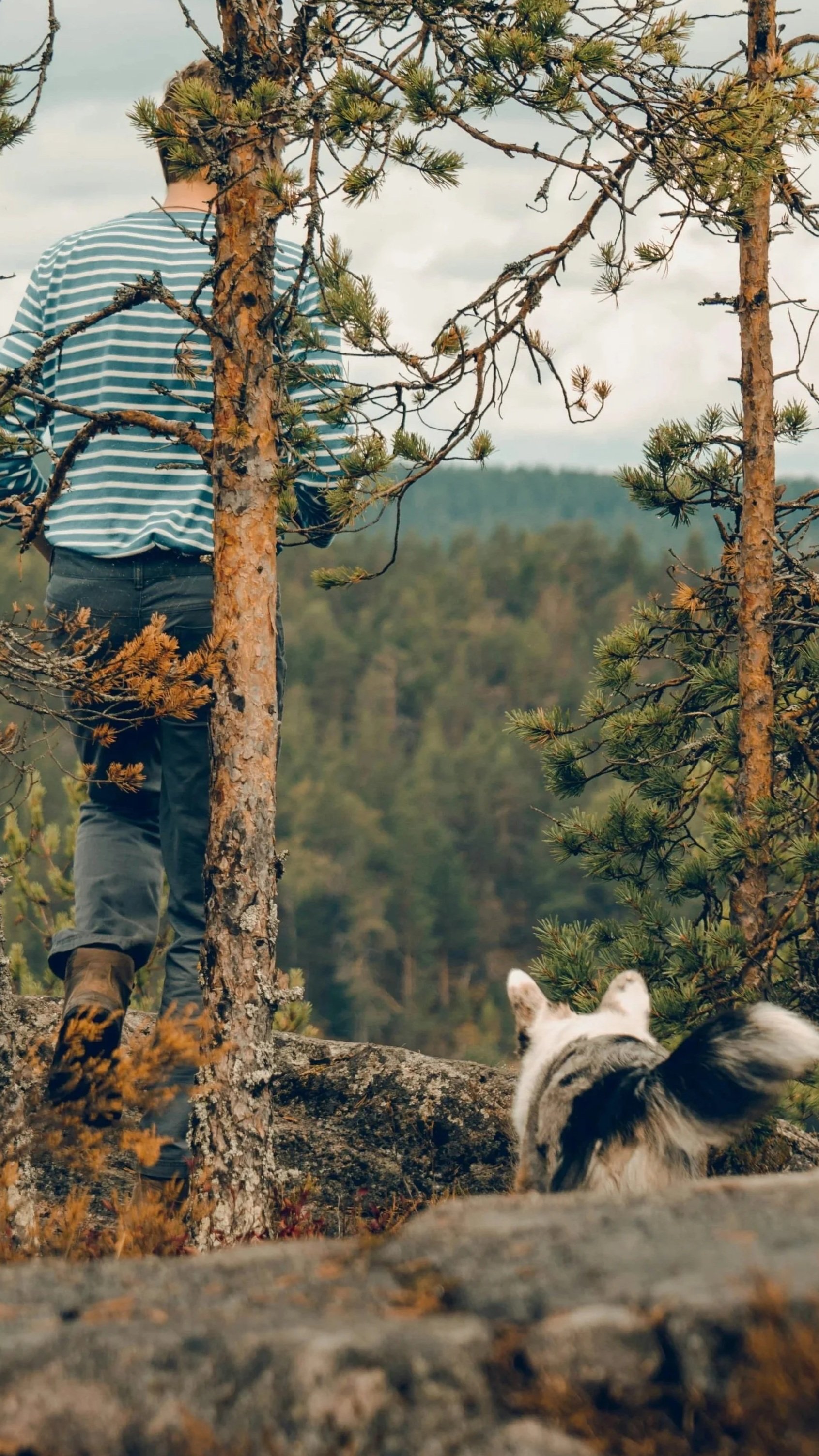
Man and a medium sized tri colour dog in the woods
Once your dog is comfortable with this person, have them start leaning in — taking an interest in what your dog is sniffing, exploring, or fixating on. Be curious.
Noticing the squirrel they've locked onto, or crouching down near the toy they've chosen — these are small things that land big. You're not forcing a connection. You're just saying: I see what you see. ” I'm here. That means something to a dog who isn't sure yet whether people are safe.
Exercise Four: Delivering Dinner (and Walking Away)
To keep building your dog's belief that this person is a source of good things, ask them to deliver your dog's dinner bowl. The moment they put the dish down, they leave — no lingering, no eye contact, no waiting to see what happens. The message to your dog is clear: I'm not here to take anything from you.
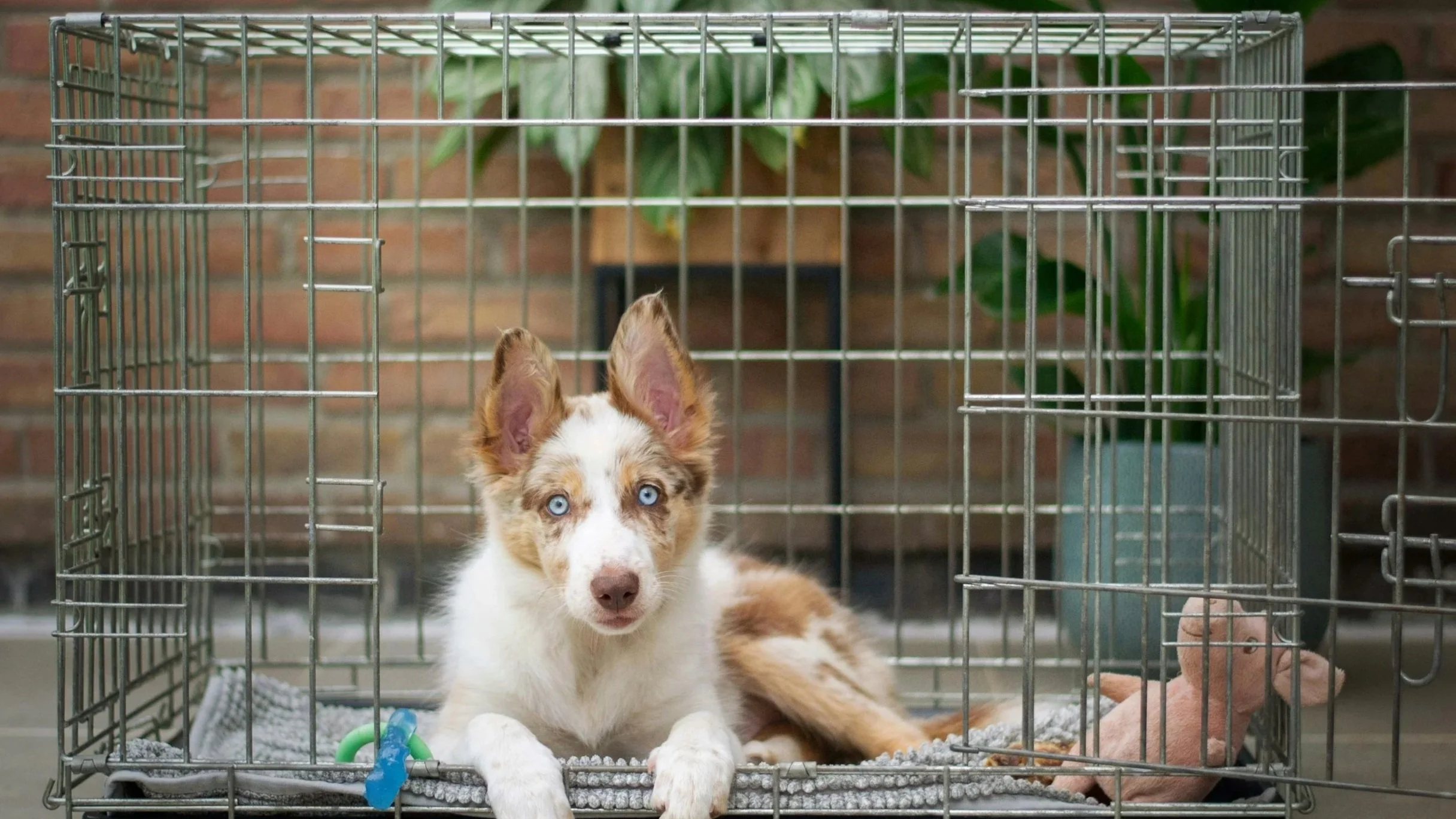
Blue eyed shepherd resting in a crate
Exercise Five: Crate Training
If your dog is showing aggression, help them establish a safe place — their crate — somewhere they can go to decompress. Aggression can look different dog to dog: the one who charges forward barking, or the one who goes completely still and then lets you know, low and clear, that you've come too close. Frozen and growling is just as serious as loud and rushing.
This is helpful for all dogs at any stage, but it's especially useful for anxious or reactive dogs. Once crate-trained, your dog can watch you answer the door from the safety of their space and witness you staying calm with the person who worries them. Over time, that visual matters.
What Not to Do
A word on what not to do: resist the urge to be over-the-top about any of this. The big voice, the leaning in, the excited energy — a fearful dog doesn't read that as friendly. They read it as pressure. However well-intentioned, it's too much, too fast. Take it slow. This is a relationship you're building. Respect your dog's timeline, even if it's slower than you'd like. Your patience will pay off.
If the person your dog is fearful of is your partner who shares your bed, keep the dog out of the bed for now. This can lead to guarding behaviour and the risk of your dog lashing out at your partner in the middle of the night.
And for the time being — until you've worked with a trainer who gives you the green light — avoid the dog park. If your dog is displaying fearful behaviour with someone in your home, they're likely to show it with strangers at the park too. When your trainer says they're ready, start slow: short visits during quieter hours, then build from there.
Next Steps
I hope this post gives you more confidence as you navigate your dog's fearful behaviour. These are steps you can certainly try on your own — and they work. But the absolute best thing for your dog's wellbeing and safety is to work with an experienced trainer, especially one who specializes in rescues.
If you'd like to work with me, I invite you to fill out my contact form to introduce yourself, and we can set up a phone call to talk about how I can help you and your dog.
Thanks for reading.
Sherri
